
How Connected Healthcare Technology Empowers Doctors to Deliver Better Outcomes
We honor the skill, compassion, and dedication of our doctors who deliver effective treatment. Every successful treatment begins with a doctor's accurate clinical decisions. A well-formed medical diagnosis requires reliable, up-to-the-minute, and well-coordinated information.
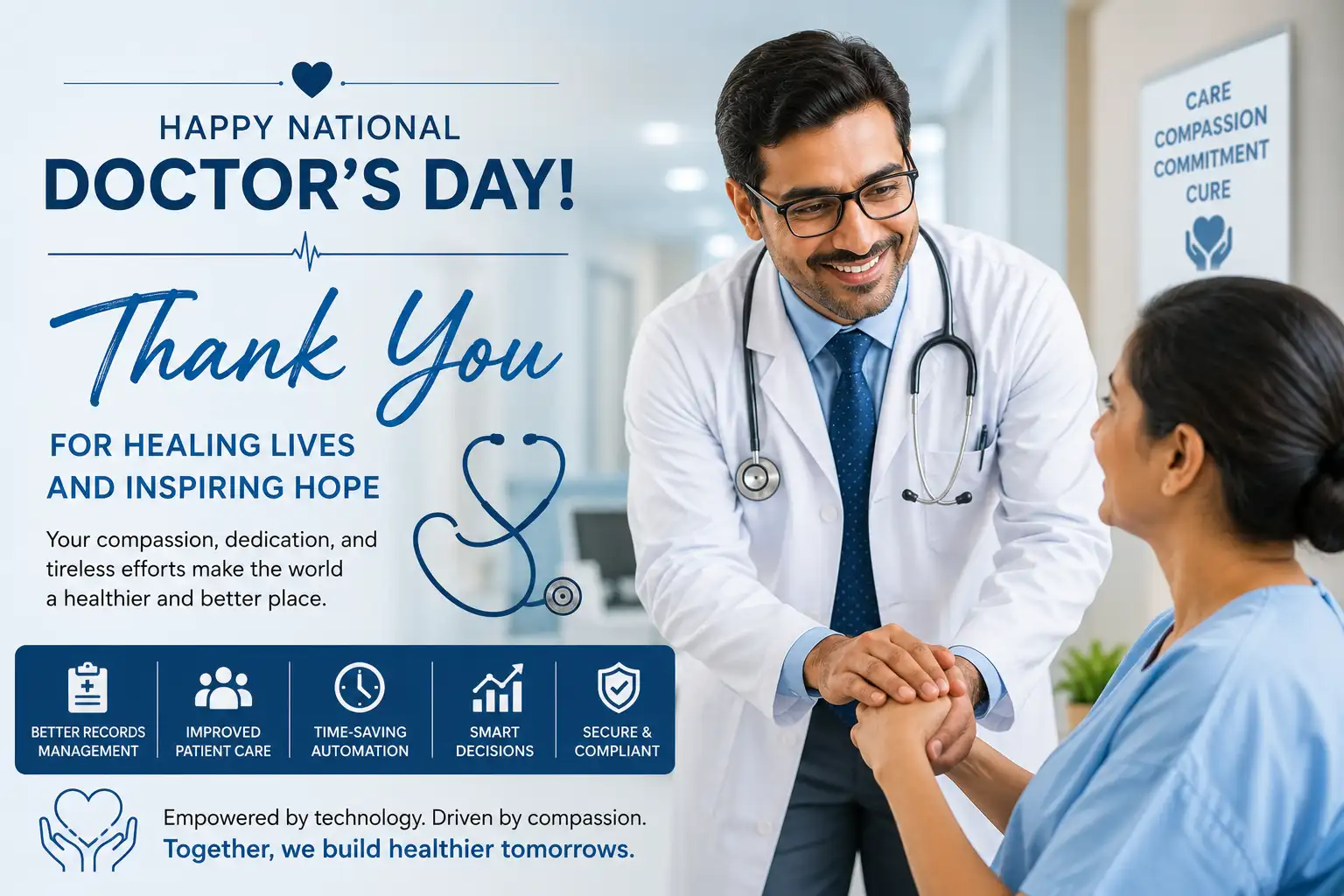
Table of Contents
- Healthcare Is Getting More Complicated
- What Every Doctor Needs: Connected Care Support
- What Is a Hospital Management System (HMS)?
- How a Hospital Management System Powers Doctors
- Top Features in an HMS for Doctors
- Core Modules of a Modern Hospital Management System
- Why Indian Hospitals Are Going Digital
- The Future: AI-Powered, Doctor-Centric Healthcare
- Building Connected Operations with MedSysB
- Conclusion
- Frequently Asked Questions
We take the opportunity on National Doctor's Day to recognize all physicians who dedicate their expertise and valuable time to improving health outcomes in every corner of the nation—whether in the emergency department, the multi-specialty clinic, the outpatient practice, or anywhere healthcare is provided.
Healthcare Is Getting More Complicated
These days, physicians must do more than just diagnoses and treatment: they must also deal with the increasing burden of medical record keeping and documentation, patient care coordination, test tracking, interdepartmental communication, and so much more.
To help doctors work smarter and better serve patients, they need support from modern, connected digital healthcare operations. By connecting clinical workflows, patients, diagnostics, pharmacy, and hospital management, they can spend more time focused on care.
What Every Doctor Needs: Connected Care Support
Doctors make crucial decisions daily—under pressure to save lives and avoid mistakes.
Without full patient data, coordination or the ability to act swiftly, healthcare can become inefficient and even dangerous.
This is why hospitals require an integrated digital approach to enable doctors to:
- Ensure faster access to complete patient history
- Monitor the complete journey of long-term treatment
- Get prompt updates on laboratory or radiology investigations
- Minimize the burden of administrative documentation
- Facilitate better inter-departmental communication
- Accommodate more patients with shorter wait times
This becomes particularly vital in emergency and complex care situations, where accurate information access can mean the difference between life and death.
A comprehensive Hospital Management System (HMS) can make all this possible by connecting the healthcare facility into a streamlined, efficient system.
What Is a Hospital Management System (HMS)?
A hospital management system (HMS) is a modern, digital platform that seamlessly connects the various administrative and clinical functions of a hospital or clinic.
Unlike older, siloed software that manages only one part of the hospital, a modern HMS integrates the entire patient journey from the point of admission, to doctor's consultations, testing and diagnosis, treatment and follow-up, as well as hospital billing.
Key HMS features and workflows include:
- Patient registration and admissions
- Appointment management
- Electronic Medical Record (EMR) management
- Doctor's workflow
- Hospital management (inpatient and outpatient)
- Laboratory information management
- Radiology information management
- Pharmacy operations
- Hospital billing and finance
- Inventory control
- Analytics and reporting
A comprehensive HMS creates a connected digital "brain" that helps your healthcare organization operate with peak efficiency, collaboration, and superior patient experience.
How a Hospital Management System Powers Doctors
1. Always Have the Complete Patient History
Doctors need all available patient information at the ready to make sound clinical decisions.
An HMS allows physicians to view:
- Past diagnoses & treatments
- Family history
- Allergy and medication information
- Laboratory & imaging results
- Previous consultation notes
Electronic Medical Records (EMRs) provide physicians with the full history of the patient's treatment over time, enabling them to track progress and provide holistic, continued care.
The outcome for patients: Better diagnostics, improved treatment plans, increased safety, more tailored medicine, & reduced medical errors.
2. Streamline Patient Flow & Optimize Consultations
It is critical for the patient experience that the hospital flows efficiently.
With HMS, hospitals can manage:
- Patient flow and queues
- Consultation and appointment schedules
- Waiting lists
- Post-discharge care coordination
Leading to shorter wait times and more meaningful patient time in the consultation room.
3. Achieve Better Inter-Departmental Collaboration
Every hospital team is interdependent—particularly clinical ones like doctors, nurses, technicians, pharmacy, and admin staff.
An integrated HMS ensures these teams can:
- Quickly exchange patient data
- View up-to-the-minute information across departments
- Streamline referral and follow-up procedures
Ultimately leading to a more coordinated and effective approach to patient care.
4. Quicken and Improve Diagnosis
Lack of immediate access to patient data, tests and prior diagnoses delays medical decisions and can increase risks.
A connected digital system helps doctors to:
- Review all the relevant data including lab and radiology results, treatment histories and patient symptoms in one place.
- Base clinical decisions on comprehensive data, rather than incomplete information.
- Speedup treatment planning and reduce the chance of errors.
Acknowledge that while technology cannot replace doctors, it must equip them to do their job even better.
5. More Time with Patients, Less Paperwork
Healthcare documentation is crucial but time-consuming.
An HMS simplifies this by:
- Digitizing medical notes
- Allowing structured documentation
- Managing prescriptions digitally
- Providing more space and time to connect with and treat patients
6. Improve Medication Safety
Ensuring patient safety in medicine administration is essential.
By using an HMS, physicians can:
- Access patient medication history and allergies
- Provide accurate digital prescriptions
- Monitor medicine availability
- Ensure medication alerts can flag potential drug interactions
7. Drive Data-Driven Insights for the Best Care
Every hospital generates enormous amounts of patient, operational, and clinical data.
Analytics embedded in HMS empower hospital teams to identify trends in:
- Patient traffic
- Operational workflows
- Service line utilization
These insights help drive better strategic decision-making for improving care and operations.
Top Features in an HMS for Doctors
- Electronic Medical Records (EMRs) provide comprehensive patient records.
- Doctor dashboards give visibility into schedules and pending tasks.
- Digital prescriptions ensure accuracy and patient safety.
- Clinical documentation tools facilitate organized, secure notes.
- Health analytics empower smarter decisions.
Core Modules of a Modern Hospital Management System
- Patient Registration & Admission Management
- Outpatient Management
- Inpatient Management
- Doctor Management
- Electronic Medical Records
- Laboratory Information Management System (LIMS)
- Radiology Information System (RIS)
- Pharmacy Management
- Hospital Billing Management
- Reports and Analytics
Together these form an integrated digital ecosystem that drives hospital efficiency and patient care quality.
Why Indian Hospitals Are Going Digital
Many Indian hospitals are upgrading to advanced HMS solutions to meet demands for higher quality, greater efficiency and strict regulatory compliance.
- Cloud-based options ensure accessibility and secure data management.
- Scalable systems can accommodate future growth.
- HIPAA & NABH and NABL compliance are increasingly important.
- Integration capabilities for ABDM and adherence to ICD-10 are standard.
These compliance features allow hospitals to standardize operations, streamline audits and promote better care delivery.
The Future: AI-Powered, Doctor-Centric Healthcare
As hospitals continue their digital transformation, future-ready HMS will offer advanced features like:
- AI-assisted clinical documentation and decision support
- Predictive analytics to identify at-risk patients
- Optimized patient flow management through predictive modeling
- Increased interoperability across systems to enable truly connected care
Building Connected Operations with MedSysB
In moving beyond isolated software, MedSysB offers a seamless, integrated digital platform that touches every aspect of patient care and hospital operations—from the first registration to the final bill and beyond.
Our integrated solutions enhance efficiency, collaboration, and the delivery of better healthcare.
Conclusion
This National Doctor's Day, we honor the physicians who provide life-saving expertise and compassion.
We also recognize how the technology that empowers them is essential to modern healthcare.
Today's hospital management system is no longer merely an administrative tool; it's a critical digital backbone that helps doctors perform their best, reducing workload, improving access to information, enhancing collaboration, and ensuring safer, more personal patient care.
It's an investment in making a real difference for the well-being of our communities and patients alike.
Frequently Asked Questions
Want to learn more?
Discover how MedSysB can empower your clinicians and improve patient outcomes.
Request a Free Demo