
10 Must-Have Features in a Modern Hospital Management System
Discover the essential HMS features that connect clinical, financial, administrative, and operational workflows for better patient care.
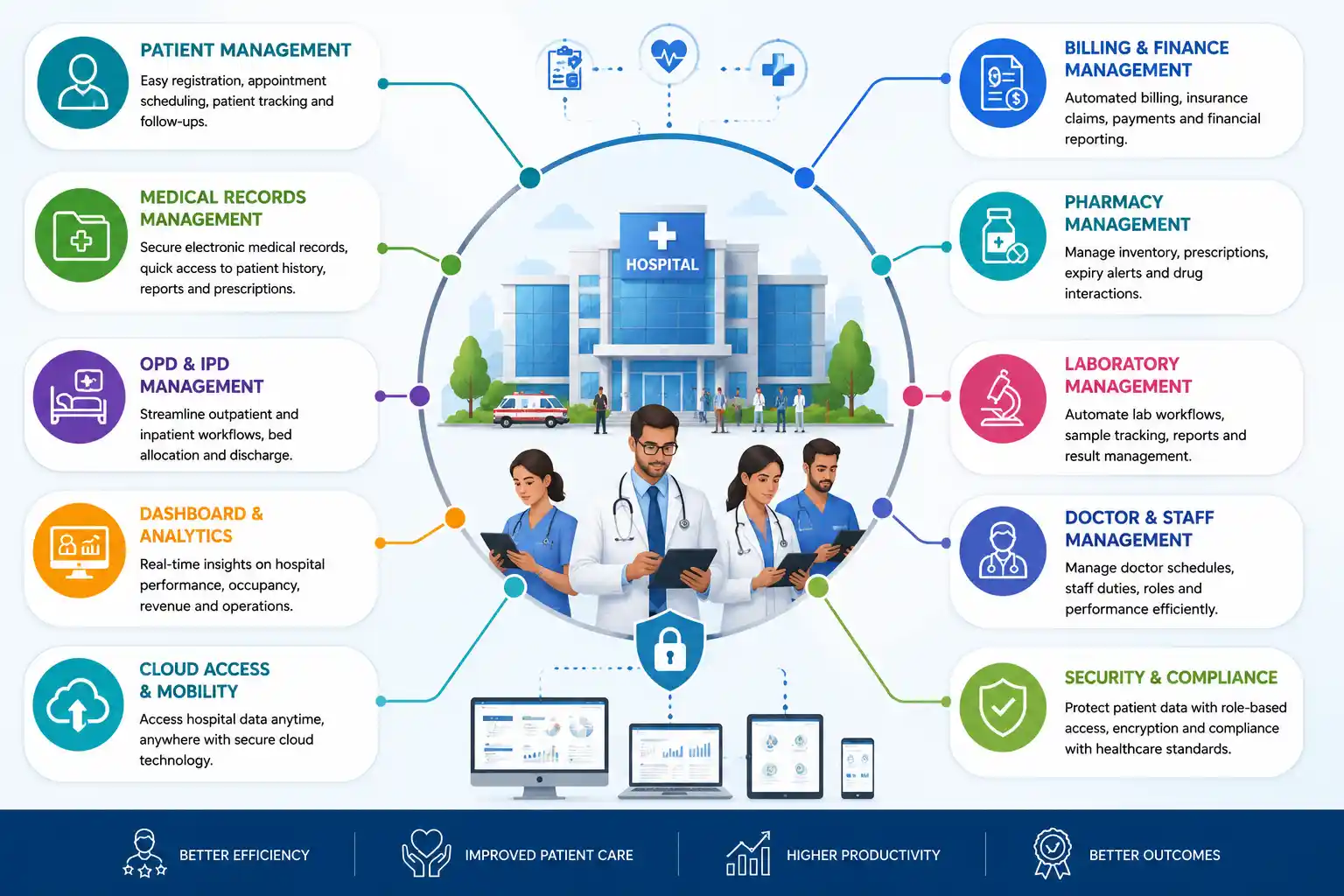
Table of Contents
Technology and healthcare go hand-in-hand, and the field is constantly seeing digital transformation in full effect. With ever-increasing patient volumes, dynamic compliance regulations, rising costs, and cumbersome administrative processes, the healthcare system needs a modern touch to effectively accommodate patient preferences, personal touches, and personalized experiences. That is why leveraging cutting-edge digital health solutions has become non-negotiable.
Nevertheless, quite a few hospitals are struggling to manage their processes using separate pieces of information and disconnected systems. This inevitably causes long wait times for patients, repeated entries, billing blunders, poor communication, and unnecessary medical mishaps.
A modern and functional Hospital Management System (HMS) is now an absolute essentiality to streamline operations and succeed in the competitive world of healthcare. An HMS effectively ties together clinical, financial, administrative, and operational functions in a centralized and manageable platform that can boost efficiency, foster teamwork, and result in better outcomes for patients.
Below are ten critical features to consider while implementing an HMS for your hospital.
Why Every Hospital Needs an HMS in the Age of Digital Health
The challenges in healthcare today demand intelligent solutions:
Growing Population
Traditional systems just do not cut it for the ever-increasing influx of patients.
Increasingly Tedious Administrative Processes
Staff waste countless hours managing registrations, appointments, admissions, discharges, billing, pharmacies, laboratories, insurance claims, and schedules manually.
Strict Regulatory Demands
Complying with intricate regulations and ensuring security and transparency of patient data are paramount for audits.
Soaring Operational Costs
Inefficient resource utilization, inventory spoilage, lost revenue, and repeated manual work all escalate costs.
Need for a Unified System
Multiple standalone software systems limit insight and impede fast decision-making. An HMS brings together hospital operations and presents a single point of truth.
10 Essential Features for a Comprehensive HMS
1. Electronic Medical Records (EMR)
Your digital health foundation.
The EMR digitally stores medical history, diagnoses, allergies, medications, lab tests, treatments, and doctors' notes. Eliminate paper charts and repeated data entry for better records, diagnosis, and treatment collaboration.
2. Billing and Revenue Cycle Management
Manage hospital billing processes efficiently.
Manage consultations, surgical fees, medical supplies, prescription charges, insurance claims, and invoices accurately and transparently to receive payments on time.
3. Patient Registration and Appointment Scheduling
Streamline the patient process from registration through follow-up appointments. Automated registration, simple online scheduling, and timely reminders can eliminate long queues.
4. Doctor and Staff Management
Effectively manage doctors, nurses, and other staff.
- Schedule and assign doctors
- Administer staff tasks and leave requests
- Assign work based on staff capacity
Ensuring efficient and fair operations.
5. Pharmacy Management
Track medicine inventory levels, prescriptions, refills, stock shortages, and expiry dates in real time. This improves control and reduces losses and medication errors.
6. Laboratory and Diagnostics Reporting
Help lab, radiology, and clinical departments work together seamlessly. Instant report processing and EMR integration increase speed and accuracy for better diagnosis and treatment.
7. Inventory and Asset Management
Monitor medical devices and hospital inventory in real time, track purchase orders, and reduce waste with efficient tracking and reporting.
8. Reporting and Analytics Dashboard
Track key metrics through a real-time dashboard, including bed occupancy, revenue per department, and length of stay, to support evidence-based decisions.
9. Security, Data Privacy, and Access Controls
Protect sensitive patient data with encryption, secure backups, audit trails, and secure user access controls that meet relevant regulatory standards.
10. Cloud Accessibility and Mobile Access
Let providers access patient records from phones or other devices anytime and anywhere. A cloud-based HMS offers secure, centralized access for remote care and on-the-go patient management.
The Benefits of a Connected Hospital Management System
Beyond being just software, an HMS can act as a central hub for your hospital:
Conclusion
The digital revolution in hospitals has made the decision to purchase the correct hospital management system not a question of choice but one of necessity.
The correct HMS will not only digitize records but should unify all departments, automate workflows, improve teamwork, solidify financial processes, and supply medical practitioners with the data required. Electronic Medical Records, patient registration and appointments, physician management, billing, pharmacy, diagnostics and reports, information security, cloud solutions, and an integrated analytics dashboard are the 10 essential elements that ensure an organisation stays ahead in the current and coming era of healthcare IT.
Implementing an all-in-one solution like MedSysB empowers a hospital to automate operations, optimise patient care, make staff more efficient, and prepare for a completely linked environment.
Frequently Asked Questions (FAQs)
Ready to Transform Your Hospital Operations?
Discover how MedSysB Hospital Management Software can streamline patient management, billing, pharmacy operations, and medical records.
Request a Free Demo